Avatar Icon: Practical Applications for Modern Web and Print Design
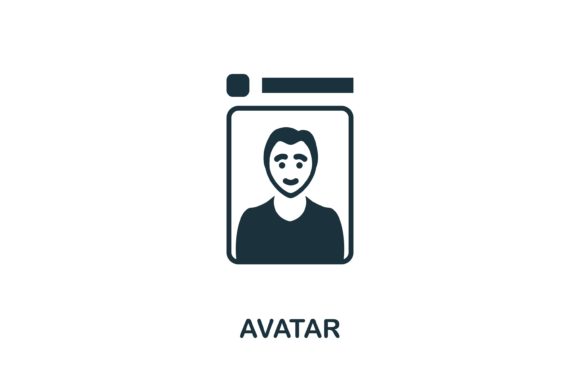
When building a digital interface or designing a printed template, the Avatar Icon serves as far more than a simple placeholder. It is a fundamental UI element that communicates identity, privacy, and user presence without requiring personal photography. In professional design workflows, having access to a clean, monochrome vector asset streamlines the creation process significantly. Whether you are prototyping a new social media platform, designing an employee directory, or creating infographic templates, a high-quality avatar symbol provides immediate visual structure.
The specific utility of this graphic lies in its versatility. Unlike complex, full-color illustrations that can clash with existing brand palettes, a monochrome avatar icon acts as a neutral foundation. It adapts seamlessly to dark mode interfaces, minimalist web themes, and corporate documentation. Because these assets typically come in both EPS and JPG formats, designers can scale them from tiny 16px favicons to massive billboard prints without losing crispness or worrying about pixelation.
Solving the Empty State Problem in UI/UX
One of the most frequent real-world applications for an avatar icon is managing "empty states" in software development and web design. When a user creates a new account but hasn't yet uploaded a profile picture, leaving the space blank creates a broken visual experience. A generic gray box feels unfinished and unprofessional.
By implementing a stylized, monochrome avatar symbol, designers maintain visual continuity. This approach is particularly valuable in:
- SaaS Dashboards: Where team member lists often contain users who haven't completed their profiles. A consistent icon ensures the table layout remains aligned and aesthetically pleasing.
- Comment Sections: Maintaining engagement even when anonymous or guest users participate. The icon signals that a human is behind the text, encouraging community interaction.
- E-commerce Reviews: Providing credibility to customer feedback without exposing private user data or relying on low-quality webcam uploads.
In these scenarios, the avatar icon isn't just decoration; it is a functional component that preserves the integrity of the grid system and guides the user’s eye through the content hierarchy.
Privacy-First Design and Anonymity
Data privacy has shifted from a niche concern to a central pillar of modern product design. Many platforms now default to anonymity to protect user safety. Here, the avatar icon becomes a tool for trust rather than identification. For mental health apps, whistleblower platforms, or support forums, using realistic silhouettes or abstract symbols allows users to engage without fear of recognition.
A monochrome vector graphic is ideal for this purpose because it lacks distinguishing features like race, gender, or age. This neutrality prevents unconscious bias in professional settings and ensures inclusivity across diverse user bases. When selecting an avatar icon for sensitive applications, prioritize designs that feel welcoming yet sufficiently abstract to guarantee psychological safety for the end-user.
Streamlining Corporate Templates and Infographics
Beyond digital products, marketing teams and HR departments frequently need avatar symbols for internal and external communications. Creating custom illustrations for every presentation or document is time-prohibitive. Having a library of editable EPS files allows non-designers to drag and drop consistent visuals into PowerPoint decks, Canva templates, or Adobe InDesign layouts.
Consider the practical workflow of an HR manager creating an organizational chart. Using mismatched headshots can make the company look disorganized. Replacing photos with uniform avatar icons creates a polished, cohesive look that emphasizes roles over individuals. Similarly, infographic designers use these symbols to represent demographic segments or user personas. The monochrome nature of the icon means it can be easily recolored to match specific section headers or data visualization color codes without requiring advanced illustration skills.
Technical Advantages of Vector Formats
Understanding file formats is crucial for maximizing the value of your avatar icon collection. While JPG files offer immediate compatibility with word processors and basic image editors, they lack flexibility. The EPS (Encapsulated PostScript) format is where the true power lies for professional output.
With an EPS file, you can open the avatar icon in Adobe Illustrator, Affinity Designer, or CorelDRAW to modify the stroke weight, adjust the curvature, or change the fill color instantly. This editability is essential when adapting a generic icon to fit a specific brand guideline. If your brand uses a 2px line weight and the downloaded icon uses 4px, a raster image would require tedious redrawing. A vector file allows for global adjustments in seconds, ensuring your templates remain on-brand across all touchpoints.
Choosing the Right Style for Your Audience
Not all avatar icons serve the same emotional purpose. Before downloading or purchasing a collection, consider the tone of your project. The style of the symbol dictates how users perceive the platform.
Geometric and Abstract: Best suited for fintech, cybersecurity, and enterprise software. These shapes convey stability, logic, and security. They remove human emotion entirely, focusing purely on function.
Rounded and Soft: Ideal for social networks, education platforms, and healthcare. Curved lines and softer silhouettes suggest approachability and community. Even in monochrome, the absence of sharp angles makes the interface feel safer.
Detailed and Realistic: Useful for fashion, gaming, or creative portfolios where the avatar needs to hint at personality without showing a face. However, be cautious with detailed vectors as they can become visually noisy at small sizes.
A common pitfall is choosing an icon set that is too stylistically distinct from the rest of the UI. If your website uses flat design with solid colors, a gradient-heavy or skeuomorphic avatar icon will look out of place. Always test the icon at actual display sizes—what looks elegant at 500px might become an unrecognizable blob at 32px.
Accessibility and Inclusivity Considerations
When implementing avatar icons, accessibility must be part of the selection process. Monochrome graphics generally offer excellent contrast ratios, which benefits users with visual impairments. However, ensure the icon has sufficient differentiation from the background color. A light gray icon on a white background may disappear for users with low vision.
Furthermore, consider how screen readers interpret these elements. While the visual asset is an icon, the underlying code should include appropriate alt text. If the avatar is purely decorative, it should be hidden from assistive technology. If it conveys meaning (e.g., "User Profile"), the alt text must reflect that function. The simplicity of a monochrome vector makes it easier to manage these semantic distinctions compared to complex photographic images.
Integration into Design Systems
For teams working at scale, the avatar icon should be treated as a core component within the design system. Rather than treating it as a standalone image, integrate it into your component library alongside buttons, inputs, and cards. Define standard sizes (e.g., XS, SM, MD, LG, XL) and establish rules for how the icon behaves responsively.
Having easy-to-edit source files facilitates this integration. You might need a version with a circular mask for mobile views and a square version for desktop tables. By maintaining a master EPS file, you can generate these variants consistently. This systematic approach reduces technical debt and ensures that whether a developer pulls the asset for a React component or a marketer grabs it for a PDF report, the visual language remains unified.
Ultimately, the value of a high-quality avatar icon collection extends beyond aesthetics. It solves layout problems, protects user privacy, accelerates production workflows, and supports inclusive design practices. By prioritizing versatile, editable vector assets, designers and creators equip themselves with a reliable tool that adapts to the evolving demands of both web and print media.